
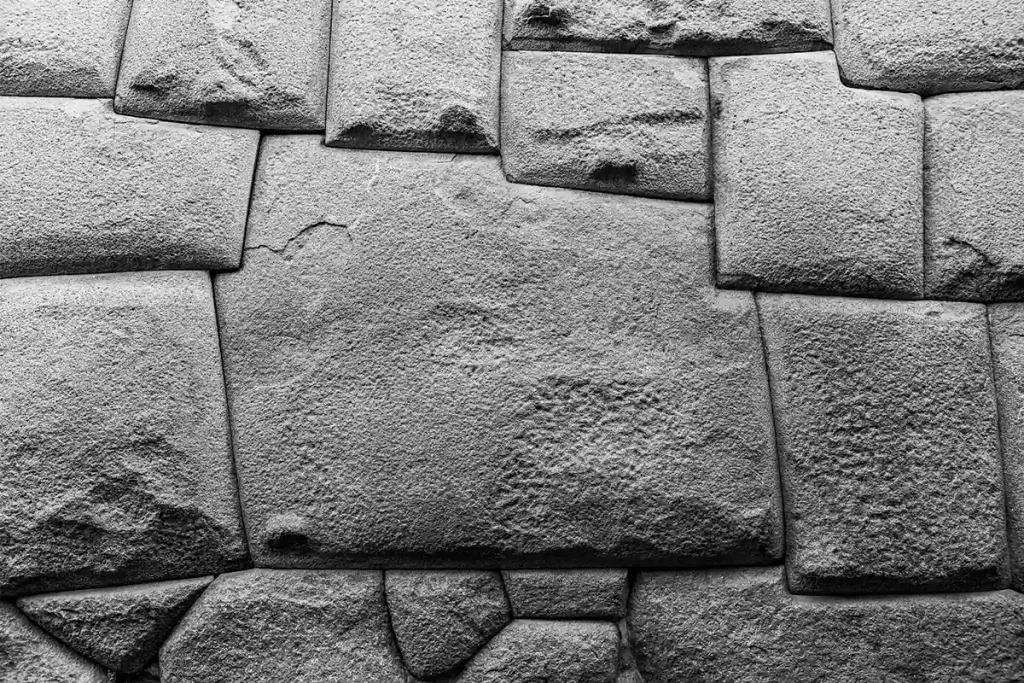
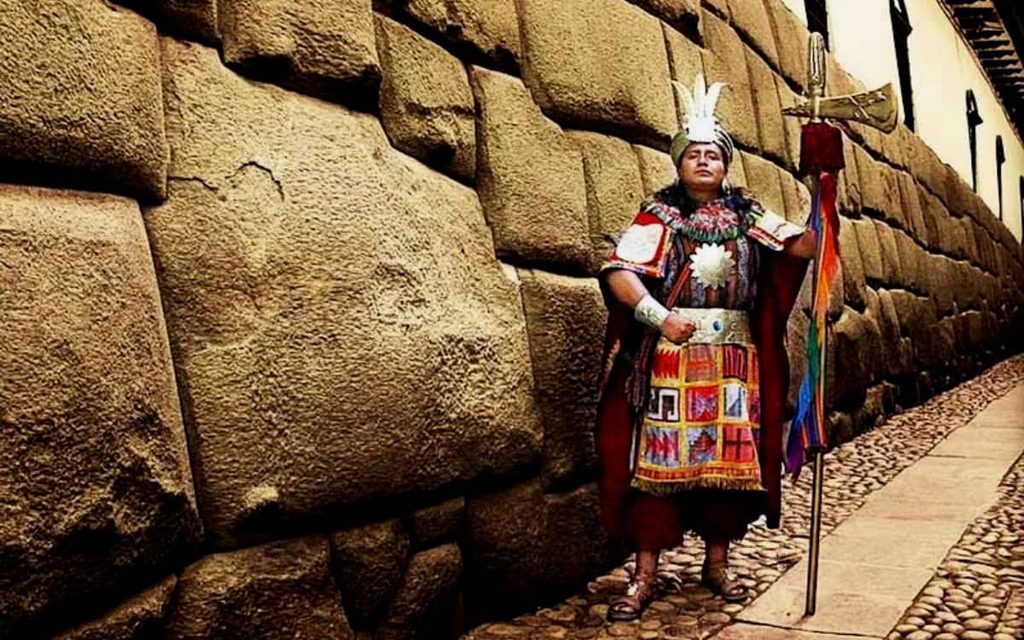
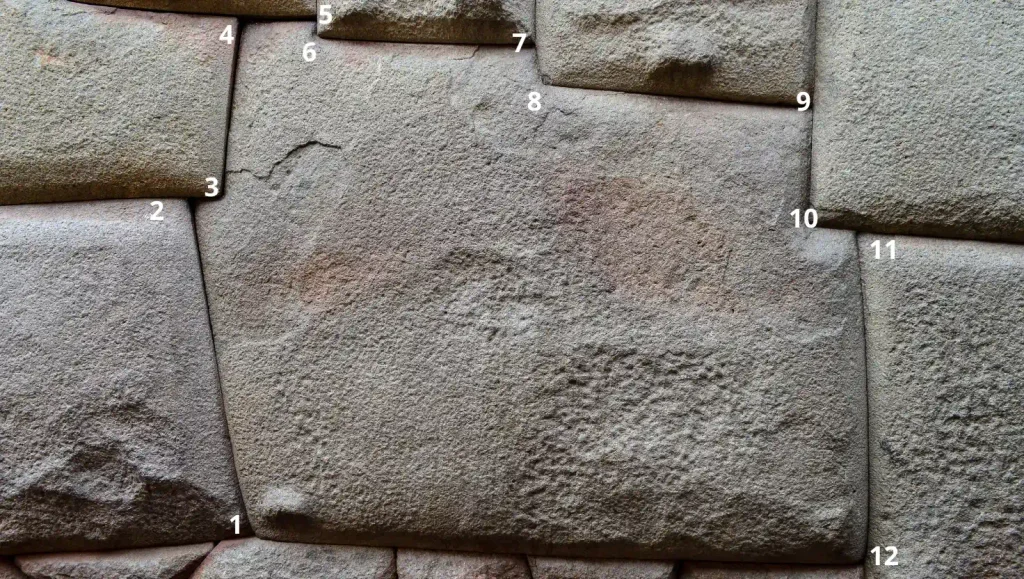
The Twelve-Angled Stone is one of the most iconic examples of Inca stonework in Cusco, Peru. Located on Hatun Rumiyoc Street, in the historic center of Cusco, this massive carved stone is famous for its twelve precisely fitted angles, which form part of an impressive ancient Inca wall.
Its extraordinary construction demonstrates the sophisticated knowledge of Inca architecture, stone cutting, and masonry. Today, the Twelve-Angled Stone is one of the most visited attractions for travelers interested in the history and engineering of the Inca civilization.
Where Is the Twelve-Angled Stone?
The Twelve-Angled Stone is located on Hatun Rumiyoc Street, just a short walk from Cusco’s Plaza de Armas.
Twelve-Angled Stone
The stone forms part of an original Inca wall that was incorporated into later colonial architecture. Visitors can easily reach it on foot while exploring the historic center of Cusco.
Why, Is It Called the Twelve-Angled Stone?
The name comes from the twelve angles or corners visible around the stone. These angles allow it to interlock precisely with the surrounding stones.
Unlike modern masonry, the Incas did not rely on mortar to hold their finest stone walls together. Instead, stones were carefully shaped so that their surfaces fitted together with remarkable precision.
This technique helped create walls that were exceptionally stable and resistant to the frequent earthquakes that affect the Cusco region.
Inca Engineering and Stonework
The Twelve-Angled Stone illustrates several characteristics of Inca architecture:
- Precision stone cutting
- Irregular polygonal shapes
- Interlocking masonry
- Extremely tight joints
- Exceptional structural stability
- Adaptation to seismic conditions
The Incas developed different styles of masonry depending on the importance and function of a building. The stonework found in Cusco’s most important structures reflects an advanced understanding of geometry, construction and stone fitting.
How Did the Incas Carve the Stone?
The exact techniques used by Inca stonemasons remain an important subject of archaeological discussion.
Researchers generally believe that Inca builders used stone tools and harder materials to shape and polish blocks, repeatedly testing and adjusting the surfaces until the pieces fitted together.
The process would have required considerable labor and highly specialized craftsmanship.
Is particularly impressive because its irregular geometry had to correspond precisely with the stones surrounding it.
Was the Twelve-Angled Stone Part of an Inca Palace?
Scholars traditionally associate the wall on Hatun Rumiyoc Street with the Inca Roca palace, although they must explore the precise historical attribution and original configuration of the structures in this area within an archaeological context.
Today, the surviving Inca wall serves as an important example of how colonial Cusco incorporated Inca architecture.
Twelve-Angled Stone and Earthquakes
One of the most fascinating characteristics of Inca masonry is its ability to withstand seismic activity.
Cusco has experienced numerous major earthquakes throughout its history. In many locations, Inca walls survived earthquakes that severely damaged or destroyed later colonial structures built on top of or around them.
The slightly inclined walls, polygonal stones and interlocking construction contributed to their structural resilience.
However, it is important not to describe the Twelve-Angled Stone as completely “earthquake-proof.” Its survival reflects a sophisticated construction system rather than a single magical property of the stone.
Why Is the Twelve-Angled Stone Famous?
The Twelve-Angled Stone has become a symbol of Inca engineering and Cusco’s archaeological heritage because visitors can observe its craftsmanship at very close range.
The remarkable precision of the joints gives it fame: even though the stone has an irregular shape, it fits into the surrounding masonry as if someone specifically designed it for that exact position.
For travelers, it offers a simple but powerful introduction to the sophistication of Inca stone architecture.
Best Time to Visit
The Twelve-Angled Stone can be visited as part of a walking tour through the historic center of Cusco.
For a more comfortable experience:
- Early morning: fewer crowds and softer light for photography.
- Late afternoon: pleasant conditions for walking through the historic center.
- Dry season (May–October): generally favorable weather for sightseeing.
- Rainy season (November–April): bring rain protection and allow flexibility for showers.
Because the stone is located on a public street, visitors should follow local rules and avoid touching, climbing on, or leaning against the archaeological masonry.
How to Visit the Twelve-Angled Stone
A visit to the place can easily be combined with other attractions in central Cusco, including:
- Plaza de Armas
- Cusco Cathedral
- Qorikancha
- San Blas neighborhood
- Hatun Rumiyoc Street
- Other historic Inca walls and archaeological sites
A walking tour is one of the best ways to appreciate the relationship between Inca and colonial architecture in Cusco.
Frequently Asked Questions
What is the Twelve-Angled Stone?
It is a famous Inca masonry block in Cusco, Peru, distinguished by its twelve visible angles and exceptionally precise stonework.
Where is the Twelve-Angled Stone?
It is located on Hatun Rumiyoc Street in the historic center of Cusco, near the Plaza de Armas.
Why is the Twelve-Angled Stone important?
It is an iconic example of the precision and sophistication of Inca stone masonry.
How many angles does the stone have?
The stone is traditionally identified as having twelve angles.
Can you touch the Twelve-Angled Stone?
Visitors should not touch or climb on the archaeological wall. Protecting the stonework helps preserve it for future generations.
Is the Twelve-Angled Stone free to see?
Yes. It can be viewed from the public street without requiring a separate archaeological-site ticket.