
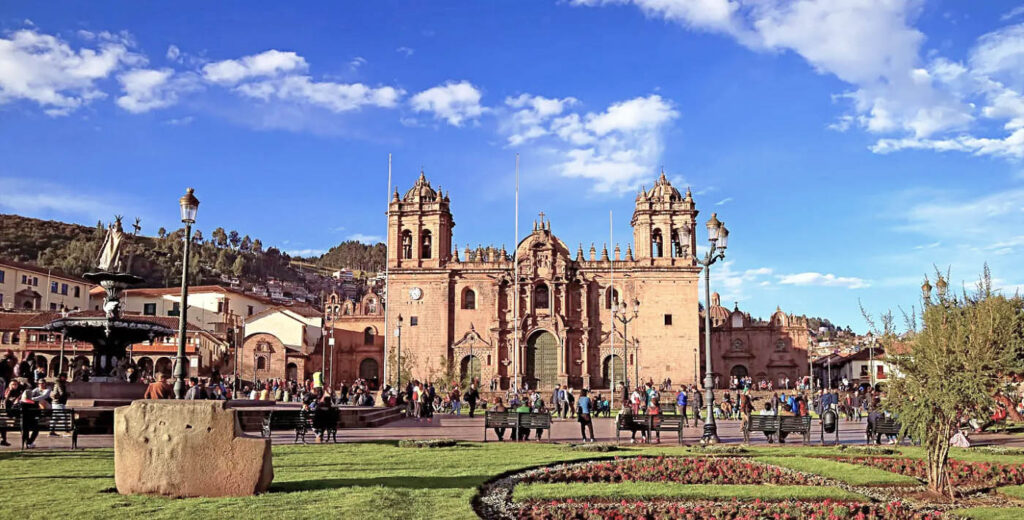
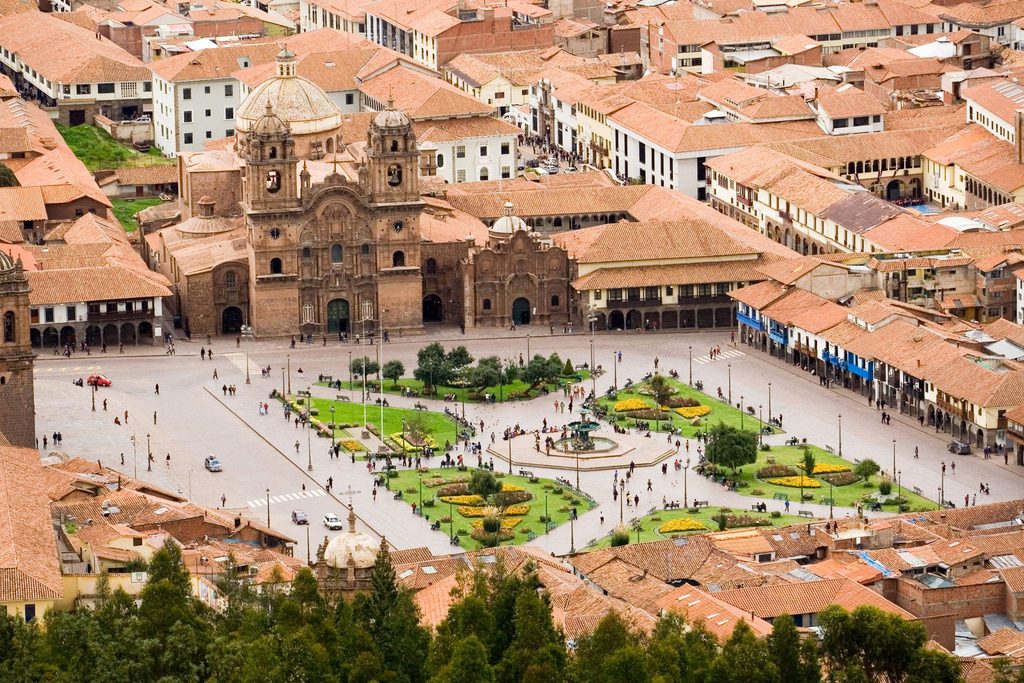
Cusco Cathedral, also known as the Cathedral Basilica of the Assumption of the Virgin, is one of the most important historical, religious, and architectural landmarks in Peru. Located in the heart of Cusco’s Plaza de Armas, this magnificent monument represents the fusion of Spanish colonial architecture and Andean artistic traditions.
Built over an important Inca ceremonial site, the cathedral preserves centuries of history, religious art, gold and silver decorations, and paintings from the renowned Cusco School of Art.
For travelers visiting Cusco and Machu Picchu, exploring the cathedral is an essential cultural experience and one of the highlights of a city tour.
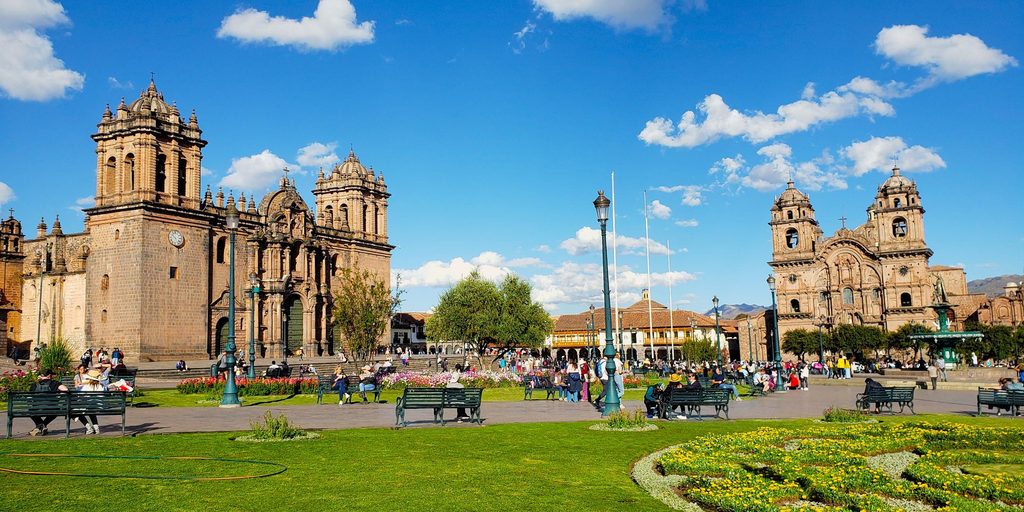
1. Where is located?
Cusco Cathedral is situated on the northeastern side of the Plaza de Armas, the city’s principal historic square.
- Location: Plaza de Armas, Cusco, Peru.
- Altitude: Approximately 3,399 meters (11,152 feet) above sea level.
- Region: Cusco, southeastern Peru.
- Nearby attractions: Qorikancha, the Church of the Society of Jesus, Hatun Rumiyoc Street, and the Twelve-Angled Stone.
Its central location makes it easy to visit on foot while exploring Cusco’s historic center.
2. History of Cusco Cathedral
The construction of Cusco Cathedral began in 1559, following the Spanish conquest of the Inca Empire. It was built on the foundations of the former Inca palace of Viracocha, known as Kiswarkancha.
The construction process took nearly a century, and the cathedral was consecrated in 1668.
Its history reflects the cultural transformation of Cusco, where Spanish religious traditions were introduced and combined with local craftsmanship, artistic techniques, and Andean symbolism.
The cathedral became one of the most important religious centers of colonial Peru and remains a significant symbol of the city’s historical identity.
3. Architecture of Cathedral
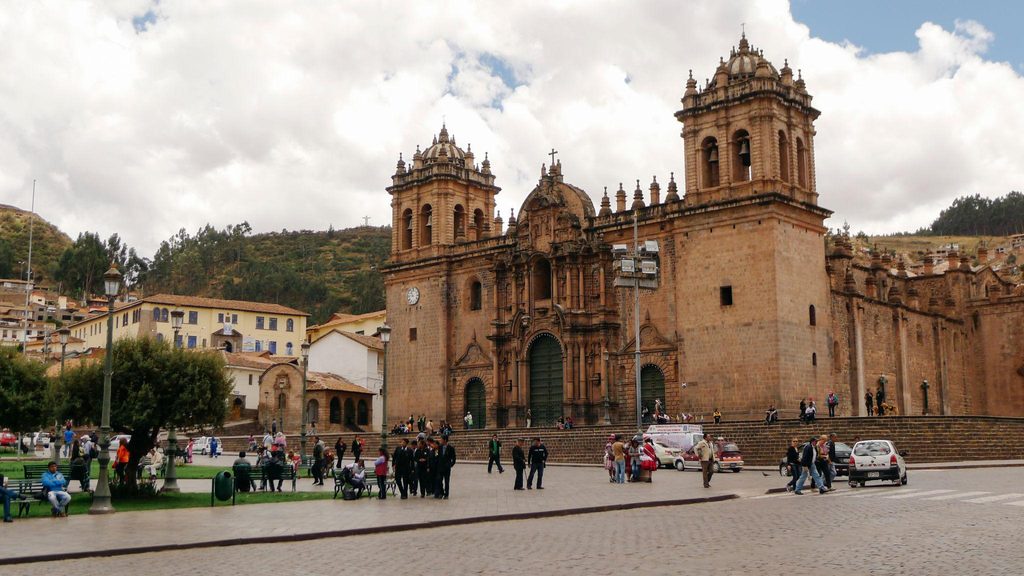
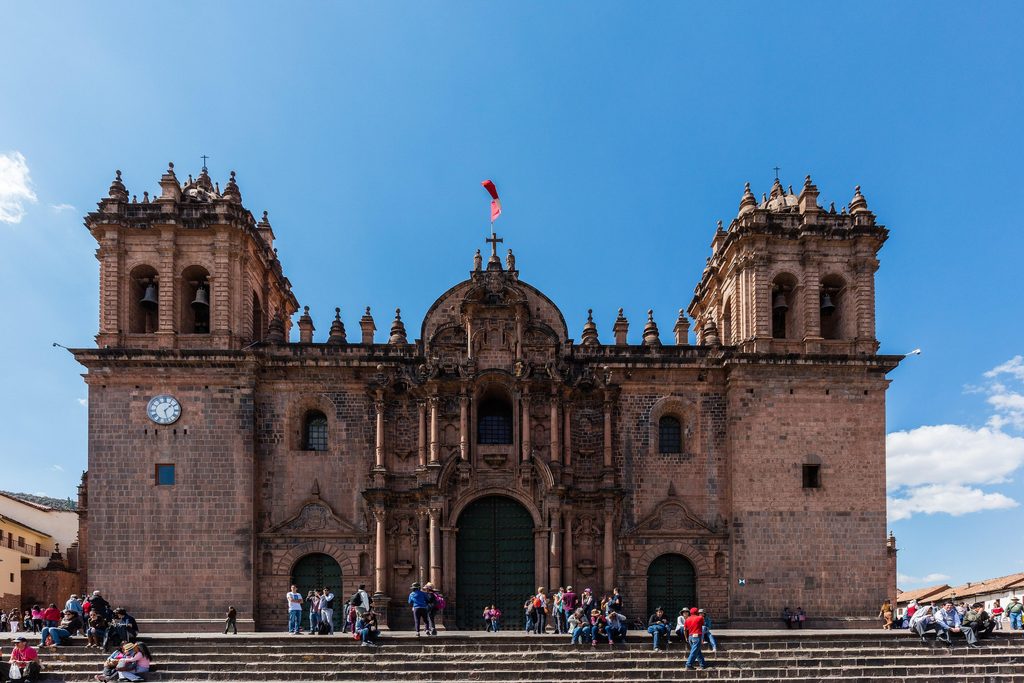
The cathedral combines several architectural styles, reflecting the different periods of its construction.
Main architectural features:
- Renaissance: Symmetrical proportions, classical details, and monumental stone façades.
- Baroque: Decorative elements, elaborate altars, and ornamental religious details.
- Gothic influences: Visible in some interior decorative and structural elements.
The cathedral features three naves, massive stone columns, carved wooden furnishings, chapels, and impressive religious altars.
One of its most remarkable elements is the main altar, decorated with silverwork and intricate craftsmanship. The wooden choir, carved from cedar, is another outstanding example of colonial-era artistic production. Perú Travel+1
4. What to see inside Cusco.
The interior houses an extraordinary collection of religious artwork and historical treasures.
1. The Lord of the Earthquakes (Señor de los Temblores)
One of Cusco’s most venerated religious images. Tradition associates this crucifix with the protection of the city during the devastating earthquake of 1650. It plays a central role in Holy Monday celebrations.
2. The Last Supper painting
Painted by Marcos Zapata, this famous work depicts Jesus and his disciples sharing a meal featuring local Andean ingredients. The centerpiece is a roasted guinea pig (cuy), a traditional Peruvian dish.
3. The Silver Room
This area showcases remarkable silverwork, including a historic baldachin dating to 1733. It demonstrates the exceptional metalworking skills of colonial Cusco.
4. The carved wooden choir
An impressive cedar-wood ensemble featuring detailed religious figures and decorative carvings. It is one of the most beautiful examples of colonial wood craftsmanship in the cathedral.
5. Paintings of the Cusco School
The cathedral preserves important works by artists such as Diego Quispe Tito, Basilio Santa Cruz Pumacallao, and Marcos Zapata. These paintings combine European religious themes with Andean artistic influences.CuscoPeru.com+2
5. The Cusco School of Art
The Cusco School of Art emerged during the colonial period and became one of the most distinctive artistic movements in South America.
Its paintings are recognized for:
- Extensive use of gold leaf.
- Religious figures with elaborate clothing.
- Bright colors and decorative backgrounds.
- A combination of European and Indigenous artistic traditions.
- Andean interpretations of Christian religious themes.
The cathedral is an excellent place to understand how European religious art developed a distinctive identity in the Andes.
6. The three churches of the cathedral complex
Many visitors do not realize that the cathedral complex consists of three connected religious buildings:
| Church | Historical significance |
|---|---|
| Basilica Cathedral | The principal temple and largest building. |
| Church of El Triunfo | Built over the former Inca ceremonial site known as Suntur Wasi. |
| Church of the Holy Family (Sagrada Familia) | An additional temple completed in the 18th century. |
Together, these buildings form one of the most important religious architectural ensembles in Cusco. CuscoPeru.com+1
7. Opening hours and entrance fees
Visitors can explore the cathedral during designated tourist visiting hours, subject to religious celebrations and special events.
Reference visitor information:
| Information | Details |
|---|---|
| Tourist visiting hours | Generally 10:30 a.m.–5:00 p.m. |
| Days | Monday–Sunday |
| Recommended visit | 45–60 minutes |
| Foreign adult | S/ 40 |
| Foreign student | S/ 20 |
| Foreign religious circuit ticket | S/ 50 |
The full religious circuit ticket may include the Cathedral, the Archbishop’s Museum, and the Church of San Cristóbal. Prices and eligibility should be confirmed at the ticket office before visiting. CuscoPeru.com+2
Important: Some tourism listings publish visiting hours until 6:00 p.m., while other sources indicate 5:00 p.m. Confirm the schedule locally, especially during religious festivities. Admission to the cathedral is separate from the general Cusco Tourist Ticket (Boleto Turístico). Y tú qué planes?+2
8. Best time to visit the Cathedral.
Cusco Cathedral can be visited throughout the year. However, certain periods offer particularly interesting cultural experiences.
- April: Experience Holy Week and the traditional procession of the Lord of the Earthquakes on Holy Monday.
- June: Discover Cusco’s cultural celebrations, including the Inti Raymi season.
- May–September: Generally drier weather makes exploring the historic center more comfortable.
- October–March: The rainy season offers a different atmosphere, with fewer predictable dry days.
For a quieter tourist visit, consider arriving shortly after the morning religious services and checking the current tourist admission schedule.
9. How to get to Cusco Cathedral
Cusco Cathedral is located in the historic center, making it easily accessible from most hotels and tourist attractions.
- Walking: Approximately 5–15 minutes from many hotels in the historic center.
- Taxi: Available from other neighborhoods and the outskirts of Cusco.
- Organized city tour: The cathedral is commonly included in guided historical and cultural tours.
10. Places to visit near Cusco Cathedral
The cathedral is an excellent starting point for discovering Cusco’s historic center.
Qorikancha – Temple of the Sun
One of the most important religious centers of the Inca Empire, famous for its extraordinary stonework and colonial Church of Santo Domingo.
The Twelve-Angled Stone
A remarkable example of Inca masonry, located along Hatun Rumiyoc Street.
Church of the Society of Jesus
A magnificent Baroque church overlooking the Plaza de Armas, known for its elaborate façade and impressive interior.
San Blas Neighborhood
A charming district with narrow cobblestone streets, artisan workshops, galleries, and traditional cafés.
11. Travel tips for visiting Cusco Cathedral
To make the most of your visit, consider the following recommendations:
- Spend at least 45 minutes exploring the cathedral.
- Hire a professional local guide to understand its historical and artistic significance.
- Dress respectfully because it remains an active religious site.
- Maintain silence inside the church.
- Do not touch paintings, sculptures, or historical objects.
- Photography and video recording are generally prohibited inside the cathedral during tourist visits.
- Check opening hours before arriving, particularly during religious celebrations.
- Allow time to acclimatize to Cusco’s altitude of approximately 3,400 meters.
12. Suggested Cusco Cathedral and Historic Center tour
A guided walking tour is an excellent way to discover Cusco’s history, architecture, and cultural heritage.
| Suggested schedule | Activity |
|---|---|
| 09:00 a.m. | Meet your guide at Plaza de Armas. |
| 09:15 a.m. | Explore the Plaza de Armas and its history. |
| 09:30 a.m. | Visit Cusco Cathedral. |
| 10:30 a.m. | Discover the Church of the Society of Jesus. |
| 11:00 a.m. | Walk along Hatun Rumiyoc Street. |
| 11:30 a.m. | Visit the Twelve-Angled Stone. |
| 12:00 p.m. | Explore traditional streets and local artisan shops. |
Suggested itinerary; actual visiting times depend on admission schedules and religious activities.
13. Frequently Asked Questions about Cusco Cathedral
1. When was Cusco Cathedral built?
Construction began in 1559 and the main cathedral building was completed in 1654. The adjoining Church of the Holy Family was completed later, in 1735.
2. Why was Cusco Cathedral built over an Inca palace?
Following the Spanish conquest, colonial authorities constructed the cathedral over the former palace of Inca Viracocha, known as Kiswarkancha. This reflects the transformation of Cusco’s religious and urban landscape.
3. What is the most famous painting inside Cusco Cathedral?
One of the most famous paintings is The Last Supper by Marcos Zapata, which features roasted guinea pig (cuy) as the main dish.
4. Who is the Lord of the Earthquakes?
The Lord of the Earthquakes is a revered image of Christ crucified and the patron protector of Cusco. It is especially important during Holy Week.
5. How long does it take to visit Cusco Cathedral?
Most visitors spend approximately 45 minutes to one hour exploring its chapels, paintings, sculptures, and altars.
6. Is Cusco Cathedral included in the Boleto Turístico?
No. Admission is purchased separately or through the Cusco Religious Circuit ticket.
7. Can I take pictures inside Cusco Cathedral?
Photography and video recording are generally prohibited during tourist visits. Always follow the current instructions of cathedral staff.
8. Is Cusco Cathedral worth visiting?
Absolutely. It is one of the city’s most important historical monuments and offers an exceptional introduction to colonial architecture, Andean religious traditions, and the Cusco School of Art.
9. Can I visit Cusco Cathedral without a guide?
Yes. Independent visits are possible during tourist visiting hours. However, a professional guide can provide valuable historical and cultural explanations.
10. Is Cusco Cathedral part of UNESCO World Heritage?
Yes. It is located within the Historic City of Cusco, which UNESCO inscribed on the World Heritage List in 1983.
14. Why include Cusco Cathedral in your Peru itinerary?
Cusco Cathedral is much more than a religious monument. It represents the encounter between two civilizations and the development of a unique cultural identity in the Peruvian Andes.
For visitors traveling to the Sacred Valley, Machu Picchu, and other archaeological destinations, the cathedral provides essential historical context for understanding the Inca civilization and the colonial transformation of Cusco.
A visit to this extraordinary monument is an opportunity to appreciate the city’s architecture, religious traditions, artistic heritage, and living culture.
Explore Cusco with Pacha Expeditions
Pacha Expeditions is a 100% local tourism company offering personalized cultural experiences, historical city tours, Sacred Valley excursions, Machu Picchu journeys, and trekking adventures.
Discover the history and traditions of the Andes with knowledgeable local professionals.
- Website: salkantayexpeditions.com
- Email: info@salkantayexpeditions.com
- WhatsApp: +51 984 387 050