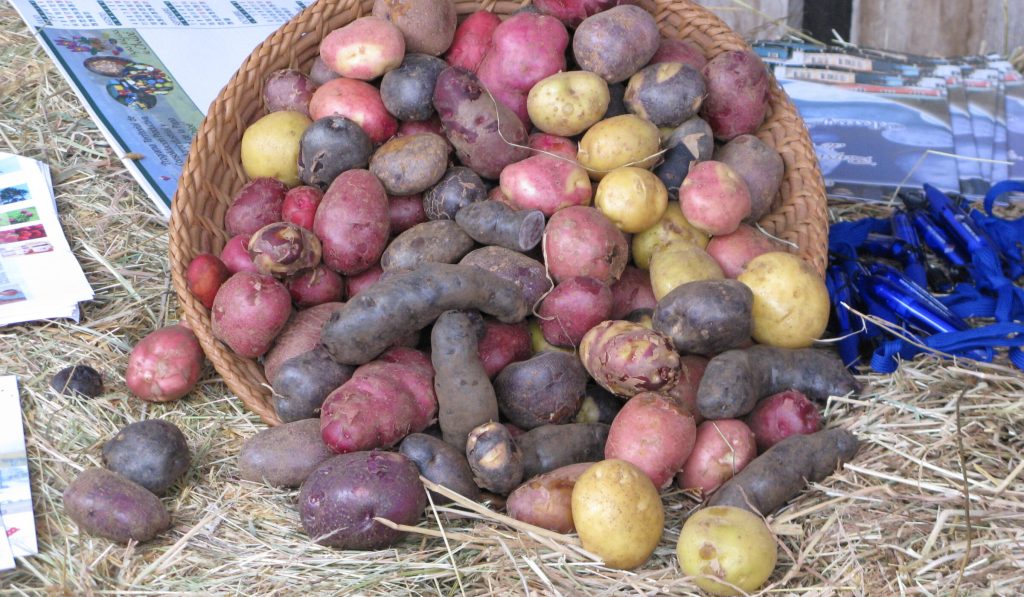
Andean potatoes, peru is home to more than 4,000 varieties of native potatoes, many of them cultivated for centuries in the Andes around regions like Cusco and Sacred Valley. These potatoes vary in color, shape, texture, and flavor, and they are an essential part of Andean culture and cuisine.
Popular Native Varieties
While the diversity is vast, several varieties are central to Andean life and regional cuisine:
| Variety | Appearance | Characteristics & Best Use |
| Amarilla | Golden skin and deep yellow flesh | High starch content; exceptionally creamy. Best for mashing or Causa. |
| Huamantanga | Elongated, light skin with pinkish “eyes” | A mix of floury and waxy textures. Perfect for roasting or stews. |
| Peruanita | Distinctive two-tone (red and yellow) skin | Buttery and slightly sweet. Best served boiled with salt or in salads. |
| Negra (Tumbay) | Dark purple/black skin, bright yellow flesh | Deeply floury texture. Excellent for frying or thick soups. |
| Canchán | Pink skin and white, firm flesh | Versatile and durable; resists falling apart. Ideal for everyday cooking. |
Some well-known varieties of Andean potatoes include:
- Papa Púrpura – deep purple flesh rich in antioxidants.
- Papa Amarilla – yellow potato with a creamy texture, widely used in Peruvian dishes.
- Peruanita – small potato with yellow flesh and pink skin, slightly buttery flavor.
- Huayro – soft and sweet, excellent for traditional meals.
- Canchán – common variety used for frying and soups.
- Qeqorani – native potato with colorful skin patterns from high Andean communities.
- Yana Imilla – dark-skinned potato traditionally grown at high altitude.
- Puma Makin – long potato shaped like a puma’s claw.
- Leona – large native potato adapted to cold climates.
- Ccompis – multicolored potato often used in ceremonial or festive meals.
Native potatoes can be:
- Red, blue, purple, black, pink, or yellow
- Round, elongated, twisted, or finger-shaped
- Floury, creamy, or firm in texture
Farmers in the Andes preserve these varieties through traditional agricultural practice. That have been passed down for generations. They cultivate many of these varieties above 3,500 meters in mountain communities.
Unique High-Altitude Specialists
Beyond the market staples, many “native” potatoes, are cultivated in specific microclimates at extreme altitudes:
- Puka Soncco: Translating to “Red Heart” in Quechua, this variety has a striking red-marbled interior rich in antioxidants. It is often used in gourmet preparations to showcase its color.
- Yanashungo: Meaning “Black Heart,” this potato features a dark purple, almost black flesh that retains its pigment even after being steamed or boiled.
- Papa Leona: A deep purple variety with a dense texture and a slightly nutty flavor profile.
Traditional Preservation: Chuño and Moraya
The Andean people developed a sophisticated freeze-drying method in high-altitude environments where they cannot store fresh crops indefinitely.
- Chuño (Black): Farmers expose potatoes to freezing night temperatures and intense daytime sun, then “walk on” them to squeeze out moisture. This process results in a dark, dehydrated potato that can last for years.
- Moraya (White): A similar process involves soaking the potatoes in cold river water for several weeks to wash out the pigments and bitterness, which results in a white, refined starch used in soups and desserts.
Are you researching these varieties for a culinary project, or are you more interested in their role in biodiversity and environmental conservation?